


War Beneath the Persian Gulf | Is Iran Targeting the Internet Backbone of the World?
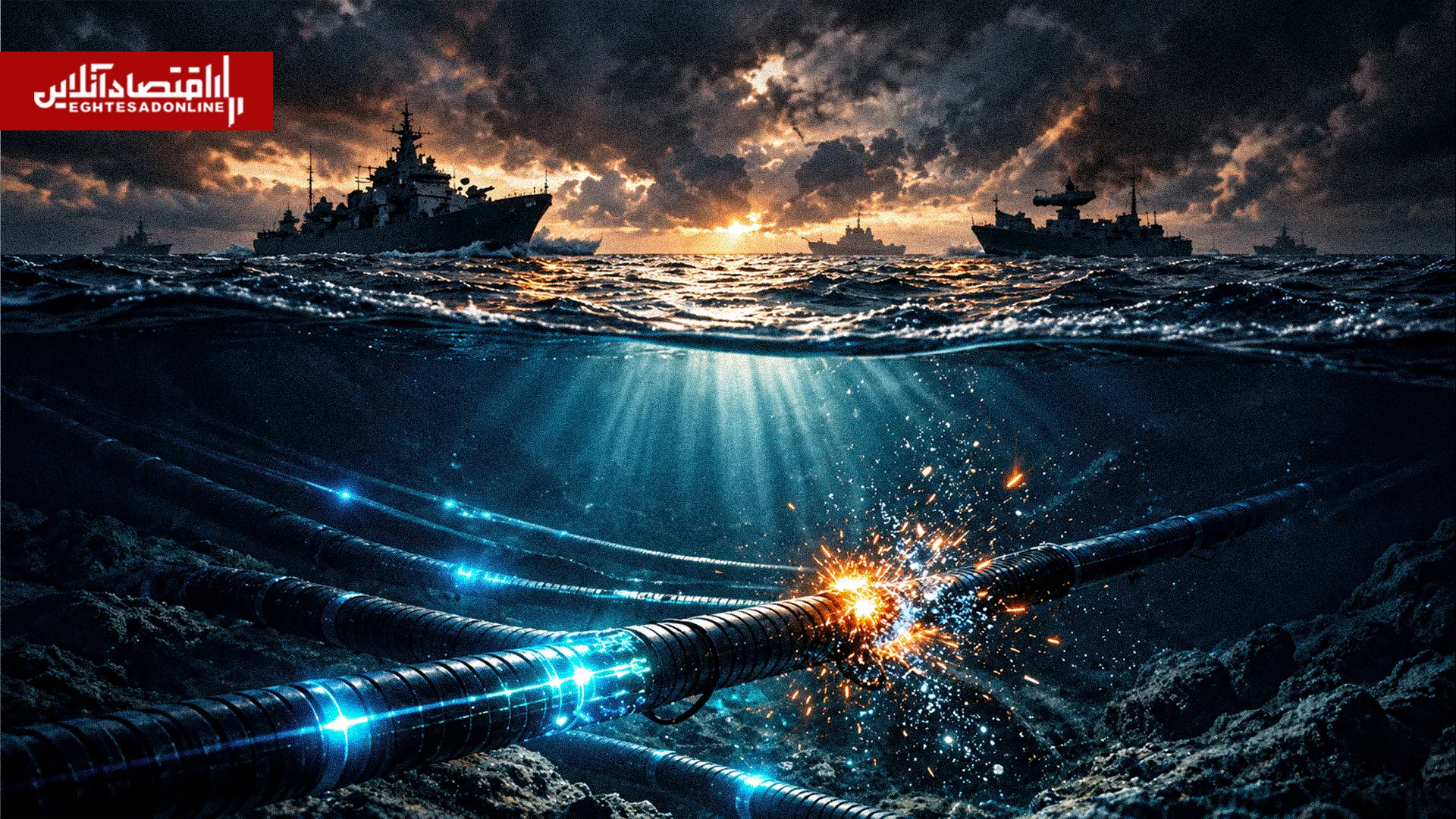
EghtesadOnline: Threats to undersea internet cables in the Strait of Hormuz have added a new dimension to the strategic importance of this vital waterway. Disruptions to digital communications could have consequences far beyond the region, affecting trade, financial markets and technology infrastructure.
If you think the Strait of Hormuz is a strategic pressure point only because of the oil tankers that pass through it and its importance for global imports and exports, you may be overlooking what lies beneath the sea. Deep beneath the waters of this passage runs a network of communications links connecting regional countries to the global digital economy.
From financial transactions and international trade to cloud services and artificial intelligence infrastructure, a significant share of economic activity depends on the fast and reliable transmission of data. Now imagine a military conflict threatening these communication routes as well. Could a crisis in the Strait of Hormuz extend beyond energy markets and reach the digital economy?
How Do Submarine Internet Cables Work?
For many people, the internet brings to mind routers, telecommunications towers and satellites. Yet most international communications travel through a less visible system: fiber-optic cables laid along the seabeds of the world's seas and oceans.
These cables contain extremely fine optical fibers protected by multiple layers of insulation and shielding. They transmit vast amounts of data between continents using pulses of light. When a message travels from the Middle East to Europe, a video call takes place or financial information is exchanged between two countries, part of that communication may pass through these cables.
According to the International Telecommunication Union (ITU), submarine cables carry approximately 99% of global internet traffic.
Which Countries Rely on These Cables, and Where Do the Networks Run?
The Strait of Hormuz lies at the junction of the Persian Gulf, the Gulf of Oman and the open waters beyond. The region's submarine communication cables connect Gulf countries to larger networks spanning Asia, Africa and Europe.
In an explanatory report published on April 28, 2026, Reuters identified three major cable systems in the region:
AAE-1: Connecting Asia to Europe
This network connects Southeast Asia to Europe through the Middle East and Egypt. Its regional landing points include the United Arab Emirates, Oman, Qatar and Saudi Arabia. A disruption along part of this route could therefore affect communications across several markets.
FALCON: Linking India to the Persian Gulf
This network connects India and Sri Lanka to countries across the Persian Gulf region, as well as parts of Africa and Egypt. Its importance lies in establishing communication links between South Asia and regional markets.
GBI: The Gulf's Regional Communications Network
The Gulf Bridge International (GBI) system was designed to connect countries across the Persian Gulf and link them to international networks. Iran is also part of this communications network.
It is worth noting that the United Arab Emirates and Saudi Arabia have made substantial investments in data centers, cloud services and artificial intelligence in recent years.
According to a TradingView report published on October 23, more than 174 active data center projects, representing a combined investment of over $93 billion, are underway in Gulf Cooperation Council (GCC) countries.
The operation of these facilities depends on fast, reliable communications, some of which are carried through submarine cables.
As a result, any widespread disruption to these networks could affect not only ordinary internet users but also technology companies, financial institutions and international businesses.
Would Cutting These Cables Shut Down the Global Internet?
According to a Reuters report published on October 23, 2026, Alan Mauldin, research director at TeleGeography, estimated that less than 1% of international bandwidth passes through the Strait of Hormuz.
Consequently, cutting the cables in this passage alone would be unlikely to bring the global internet to a standstill.
However, a limited global impact does not mean regional damage would also be limited. If several major cables were damaged simultaneously, countries along the Persian Gulf could face slower internet speeds, disruptions to some financial services and connectivity problems affecting data centers.
How Could Iran Use Submarine Internet Cables as Leverage?
Threats against internet cables in the Strait of Hormuz have, in recent months, become part of Iran's broader rhetoric of pressure and deterrence against the United States and its regional allies.
Mohsen Rezaei, secretary of Iran's Supreme Council of National Security, extended the scope of these threats beyond submarine cables to include data centers and artificial intelligence facilities associated with the United States. Rezaei warned that if war resumed, these infrastructures could also become targets.
Explaining the rationale behind this approach, he argued that Iran could not accept a situation in which its economic lifelines were attacked while the economic architecture enabling those attacks remained untouched and immune from retaliation.
Brigadier General Yadollah Javani, the IRGC's deputy for political affairs, also warned in an interview with the Al-Alam television network that if Iranian infrastructure came under attack, American and allied assets could become targets of retaliatory strikes.
Javani specifically referred to seven major undersea internet cables in the Strait of Hormuz, which, he said, could be targeted in the event of an attack on Iranian infrastructure.
As reported by Eghtesadonline, just as the world's dependence on oil has turned control of the Strait of Hormuz into a potential lever over energy markets, the modern economy's dependence on data flows could make the region's communications infrastructure a new instrument of pressure.
There is, however, an important difference: an oil shock first becomes visible in energy prices and transportation costs, whereas disruptions to internet cables could directly affect financial communications, digital services and the day-to-day operations of businesses.